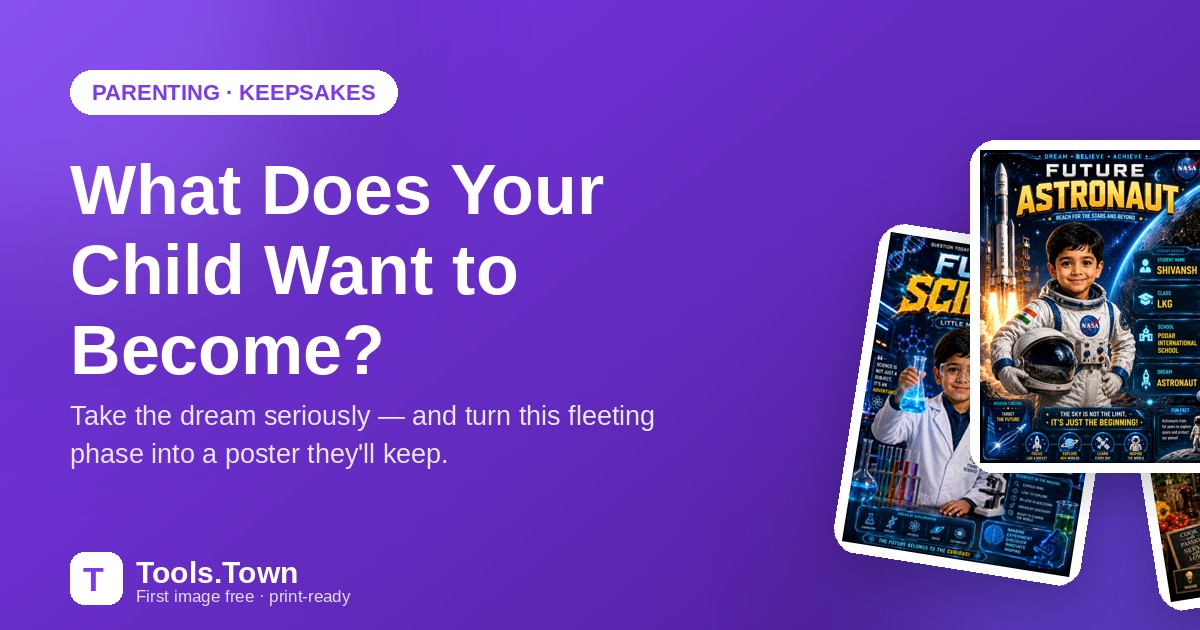
“Mumma, I’m going to be an astronaut.”
Last month it was a cricketer. Before that, a chef — that phase lasted exactly as long as the cake did. If you’re a parent, you know this loop. The question is what to do with it.
The instinct is often to gently manage expectations: that’s lovely, but it’s very hard to become an astronaut. It feels responsible. It’s also the one response child-development researchers consistently warn against — not because the facts are wrong, but because at this age the dream isn’t really about the job.
Why the answer matters more than the dream
When young children share aspirations, they’re not making a career plan. They’re testing something far more important: is it safe to want big things out loud, with you? The specific dream will change a dozen times. The memory of how you responded to it won’t.
A child who hears “you could never do that” doesn’t usually stop dreaming — they stop telling you. The goal isn’t to promise they’ll be an astronaut. It’s to keep the conversation open so you’re still in it when the dreams get real.
So the playbook is simpler than it feels:
Take it seriously, briefly. “An astronaut! What would you do up there first?” beats both a flat “that’s nice” and a lecture on entrance exams. One curious follow-up question is enough to say I’m listening.
Feed it a little. A library book about space, ten minutes of a rocket-launch video, a drawing session at the kitchen table. Small fuel, not a curriculum.
Let it die naturally. When next month it’s “actually, a chef,” don’t litigate the inconsistency. Trying on identities is the development — each one builds vocabulary, curiosity and confidence that outlasts the phase.
Mark the moment. This is the underrated one, and we’ll come back to it.
What the dream looks like at each age
The same announcement means different things depending on how old your child is. A quick map:
Ages 3–5
Pure imagination. The 'job' is really a costume and a feeling. Play along — accuracy doesn't matter at all.
Ages 6–8
Dreams attach to real people they admire — a doctor, a teacher, a cricketer on TV. Curiosity is the fuel.
Ages 9–11
They start noticing what they're good at. Connect the dream to a real skill they already have.
Ages 12+
Identity gets serious. Now your earlier 'I believe you' is the foundation they build on.
Notice the through-line: at every age, your job is encouragement plus a little fuel — never a reality check. Realism arrives entirely on its own schedule.
The mistakes that quietly close the door
Three responses that shut kids down, even with good intentions: correcting the dream (“that’s not realistic”), ranking it (“wouldn’t you rather be a doctor than a chef?”), or forgetting it entirely (asking nothing, ever). None feels harsh in the moment. All teach the same lesson — my dreams aren’t worth mentioning here.
The fix for all three is the same: treat the dream as real today, without committing to it forever. You’re not signing them up for flight school. You’re saying I see who you are right now, which is the only thing they’re actually asking.
Making the dream visible
Now, that underrated fourth step — marking the moment.
Dreams at this age are intense and almost completely unrecorded. By the time your child is twelve, neither of you will remember the astronaut summer or the month everything was about cricket. Those phases vanish unless something physical pins them down: a photo, a drawing taped to the wall, a poster on the shelf.
That’s why “your child as their dream” keepsakes land so hard. A poster of your own child in the astronaut suit or the chef’s whites does something a stock picture never could — it tells them, in a way words don’t, you saw me.
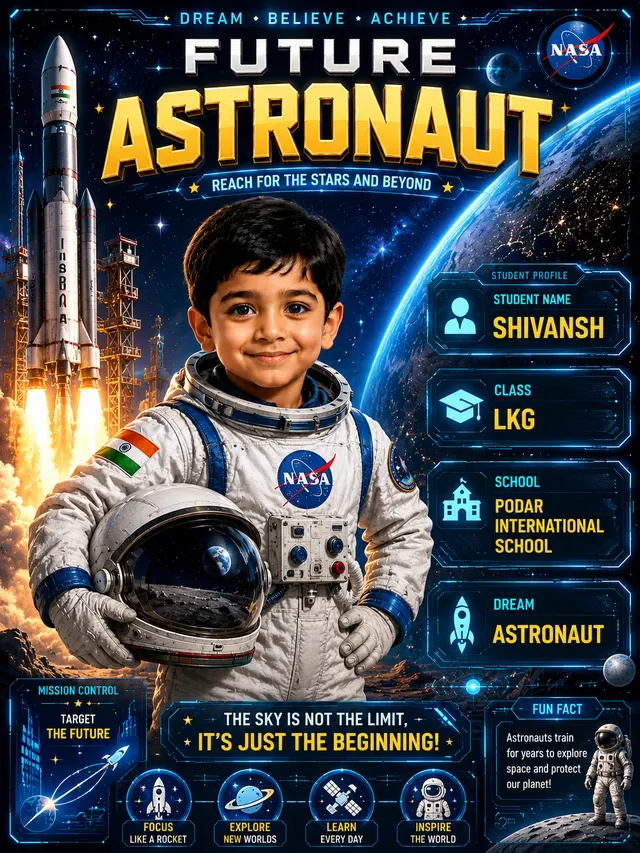
Space suit, launching rocket and mission patches — your child on a cinematic space mission.
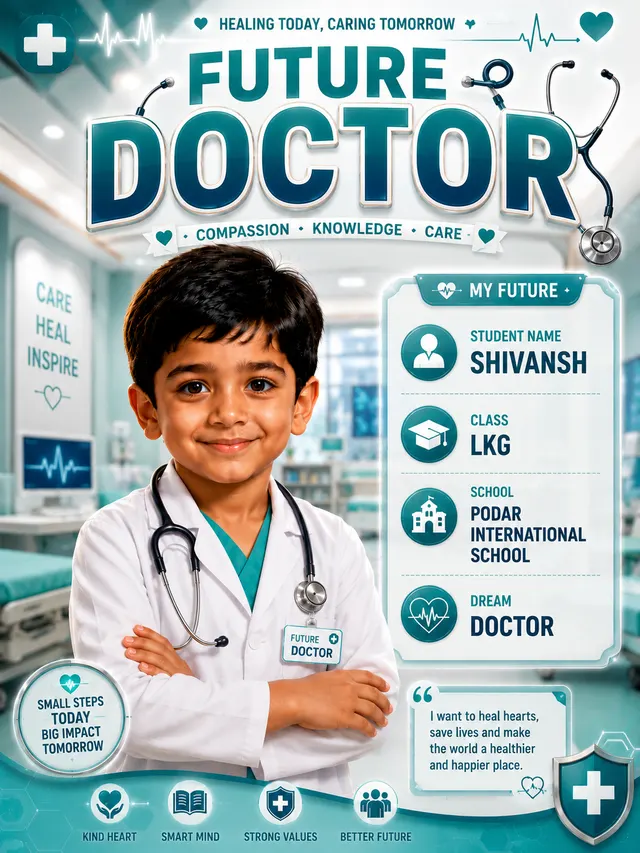
White coat, stethoscope and a warm clinic scene — the kind doctor they dream of becoming.
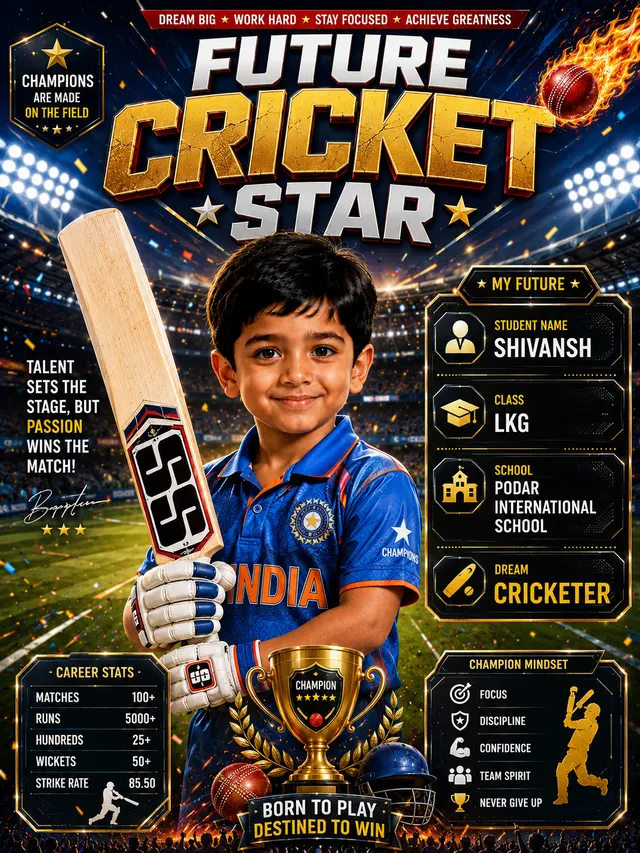
Team kit, floodlights and a roaring stadium — a sports-magazine cover with your child as the star.

Glowing flasks, holographic screens and DNA strands in a futuristic laboratory.
We built our Future Profession Poster Maker for exactly this. Upload one photo, pick from ten professions — astronaut, doctor, cricket star, army officer and more — and the AI creates a print-ready poster with their name rendered right into the artwork, in about a minute.
Print two: one for their room, one for the grandparents. The dream changes; the photo of how much they believed in it doesn’t.
Frame it now. In ten years, whatever they actually become, it’ll be the best thing on the shelf — proof that the first person to take their dream seriously was you.
Future Profession Poster Maker
Turn one photo into a print-ready poster of your child as their dream — astronaut, doctor, cricketer and more.
Related Posts
Future Profession Posters - 10 Ideas
10 Future Profession Poster Ideas for Kids (Astronaut to Artist)
6 min read
HRA Exemption Guide
How to Calculate Your HRA Exemption — Step-by-Step Guide (FY 2025-26)
8 min read
Income Tax Calculator - How to Use
How to Use the Income Tax Calculator: A Step-by-Step Guide
4 min read
Frequently Asked Questions
My child changes their dream job every week. Is that normal?
Should I correct unrealistic dreams?
Explore more on Tools.Town Blog
Finance guides, tool launches, and engineering stories — updated weekly.